
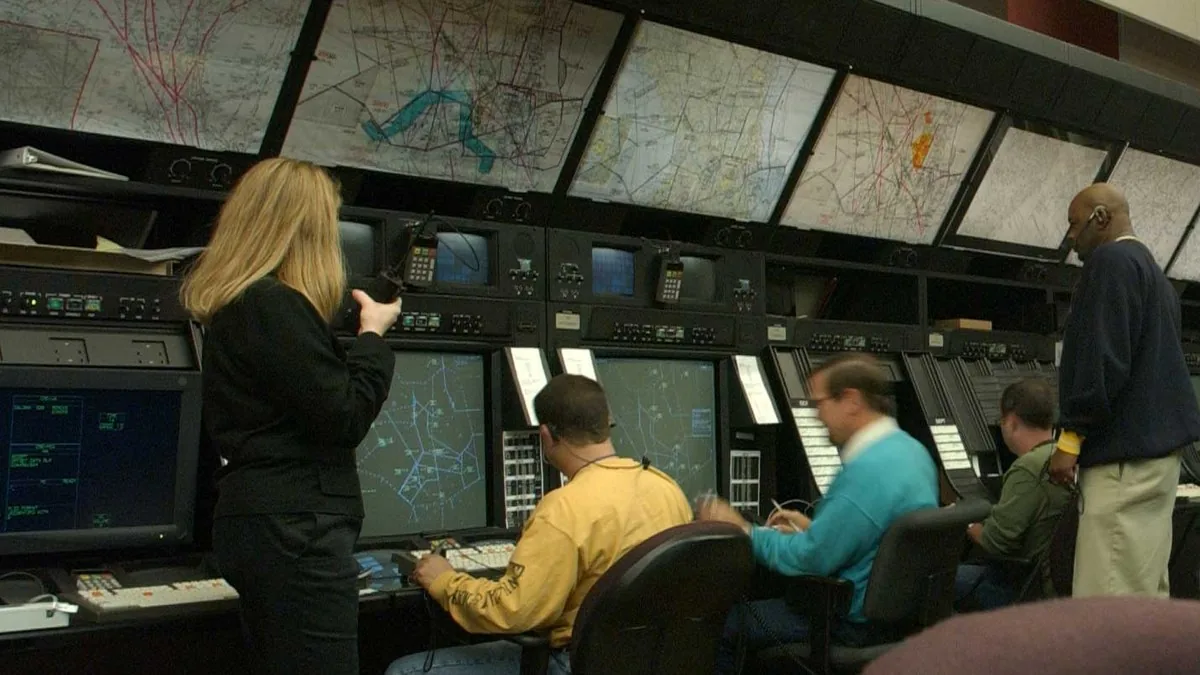

On 10 November the US Federal Aviation Administration (FAA) said it will use SMART, short for Strategic Management of Airspace, Routes and Trajectories, in the airspace of all 22 of its en route centres. The cloud-based system brings 200 data streams, including weather, flight paths, traffic flow and controller staffing, into one platform and produces scheduling and routing recommendations. The FAA says that since 21 September it has helped reroute 180 flights, saving an average of 10 minutes and almost 80 gallons of fuel per flight. Ars Technica, reporting the expansion on 13 November, notes that the union representing air traffic controllers has said it was not involved in designing or testing the system.
What the FAA announced
In a statement dated 10 November, the FAA says that after "a successful initial rollout to the National Capital Region in September, the FAA will now use SMART in the airspace of all 22 centers across the country". These centres, Air Route Traffic Control Centers, handle aircraft in the en route phase of flight, between airports. The agency's stated aims are fewer delays, lower fuel use and a better experience for passengers.
SMART started in a limited mode in the airspace around Washington, DC, on 21 September, according to the FAA's launch announcement. The Dallas Morning News reported on 9 November that it had since been extended to the centres in Atlanta, Jacksonville and Miami.
The FAA's own results since 21 September are short: 180 flights rerouted, an average of 10 minutes saved per flight and almost 80 gallons of fuel saved per flight. The agency has not published how it measured them. For scale, the FAA says on its traffic figures page that it serves more than 44,000 flights a day.
How the system works, and who decides
The FAA describes SMART as a cloud-based system that centralises 200 data streams, including weather patterns, flight paths, traffic flow and controller staffing metrics. Its one-page fact sheet says SMART uses AI to analyse airline schedules, weather, airport capacity and airspace conditions to predict traffic flows and identify potential conflicts before they occur, working as a planning layer alongside existing FAA systems. Ars Technica adds that it is designed to make scheduling recommendations, identify the best routes and determine the best order of arrivals.
People check the output at two levels. A team of FAA specialists at the SMART centre in Washington analyses and validates the data and sends scheduling recommendations to the agency's Air Traffic Control System Command Center in Warrenton, Virginia, which routes them to air traffic control facilities "for local leadership to consider". The September announcement says local leadership "can choose to accept or pass on these scheduling suggestions" and that SMART "cannot be used to replace the critical role air traffic controllers play or take over control of an aircraft."
The US Department of Transportation gave The Dallas Morning News one example. A cargo flight from Tampa to Dallas-Fort Worth was due to arrive when demand exceeded capacity; SMART recommended a shorter route to the south, controllers accepted it, and the plane arrived 12 minutes early. The department did not say which day it was or who operated the flight.
Ars Technica reported in September that SMART is part of an $875 million, 12-year contract awarded in June to Air Space Intelligence, a Boston company. The contract also covers a new flow management system for the FAA's command centre. Ars also noted that it is unclear what types of AI models SMART uses.
The open questions
The National Air Traffic Controllers Association told Flying magazine in September that it had no involvement in the system's development and initial deployment. Ars quotes the union as saying it was not consulted or involved in the "design, testing, or implementation of SMART and therefore cannot speak to its effect on the air traffic control workforce."
Airlines are supportive. In the FAA's September announcement, United Airlines chief executive Scott Kirby said that "if it works as we think it can, it will do more to reduce delays and cancellations than anything that's happened in decades", and the heads of Delta and American also backed the programme.
Philip Mann, an aviation safety and AI governance consultant who previously worked at the FAA for 17 years, told Ars in September what he would watch: "what evidence gates the next expansion: performance under real workload and degraded data rather than demonstration conditions, and a written answer to who owns the outcome when a prediction is wrong." The 10 November statement does not publish that kind of evaluation.
What other organisations can learn
Evoogen's reading: SMART is a large public example of a set-up that also suits smaller organisations, where AI recommends and people approve. The FAA wrote down who reviews the output, where it goes next and who has the final say, and said plainly what the system cannot do.
The gaps are useful lessons too. The staff whose work the tool affects most say they were not involved, and the published results are three averages rather than an evaluation. A business introducing AI suggestions for rotas, bookings or customer replies can avoid both: involve the people who will use the suggestions before launch, and decide in advance which numbers will show whether it works and what happens when it gets something wrong.
If you want AI that suggests and a person who approves, for rotas, bookings or customer replies, Evoogen can design the workflow, set it up and track the result. Talk to Evoogen about AI with human sign-off.
Sources
Evoogen checked these sources on 16 November 2026. Company and research claims stay attributed to their source; Evoogen analysis is labelled.
- Ars Technica: FAA expands AI advice to manage air traffic congestion across entire US airspace (13 November 2026) — checked 2026-11-16
- FAA General Statements: SMART Expanding Across the Nation (10 November 2026) — checked 2026-11-16
- FAA press release: SMART unveiled (21 September 2026) — checked 2026-11-16
- FAA: SMART one-page fact sheet (PDF) — checked 2026-11-16
- FAA: Air Traffic By The Numbers — checked 2026-11-16
- Ars Technica: FAA tees up $875M AI tool to help manage air traffic congestion (18 September 2026) — checked 2026-11-16
- The Dallas Morning News: FAA AI air traffic tool reduces DFW flight delays (9 November 2026) — checked 2026-11-16
- Flying: FAA’s Rollout of SMART AI System Left Out ATC Union (22 September 2026) — checked 2026-11-16